The modem’s electronic argument
Before the page came a negotiation of squeals, static and chirps. The sound meant two machines were testing the telephone line and agreeing on how to talk.
The big memory test · Issue 01
The modem. The video-store argument. The computer lab’s one working printer. These weren’t just objects—they were tiny systems that shaped how a day felt.
Start rememberingBefore you begin
“Only ’90s kids” is the invitation, not a border. People born earlier and later will recognize plenty here. The decade did not happen everywhere in the same way, and access to its defining technology was never equal.
Tap I remember this on anything that lived in your world. Your score stays on this device; nothing is transmitted.
01 · Going online
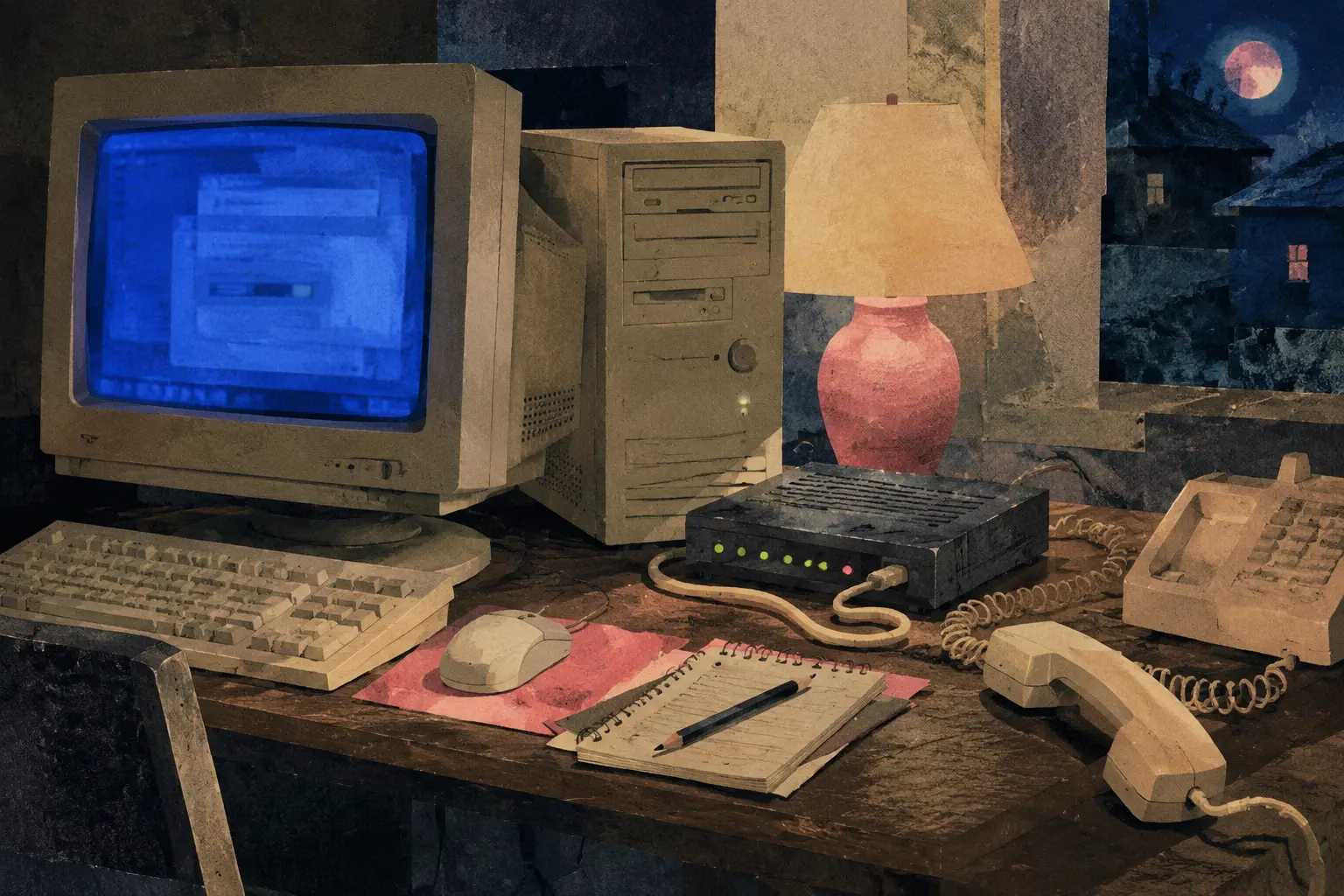
Before the page came a negotiation of squeals, static and chirps. The sound meant two machines were testing the telephone line and agreeing on how to talk.
The internet and the household telephone often shared one line. A lifted receiver could turn a carefully progressing download into an error message and a family dispute.
A large image did not pop into existence. It slowly revealed itself from the top down, giving you time to decide whether the rest was worth waiting for.
Trial discs appeared in magazines, shops and mailboxes, promising a fixed number of hours online. The internet arrived as a physical object before it became invisible infrastructure.
The computer often lived in a shared corner rather than a pocket. Privacy meant lowering the volume, minimizing a window and listening for approaching footsteps.
Stepping away from instant messaging required a tiny public statement. A lyric, joke or cryptic sentence could communicate far more than the simple fact that you were not at the keyboard.
One music file, game demo or software update could occupy the line all evening. Progress bars trained a generation to distrust the phrase “two minutes remaining.”
Why it mattered
In 2000, about half of American adults were online, but broadband reached only around 3% of households. For connected families, “going online” was still often a deliberate activity with a sound, a cost and a claim on the phone line.
Always-on access removed enormous friction. It also erased a boundary: the moment when the network entered the room.
02 · Friday night
A rented cassette came with a small mechanical duty. Rewinding was part courtesy, part store rule and part final acknowledgment that the movie had temporarily belonged to you.
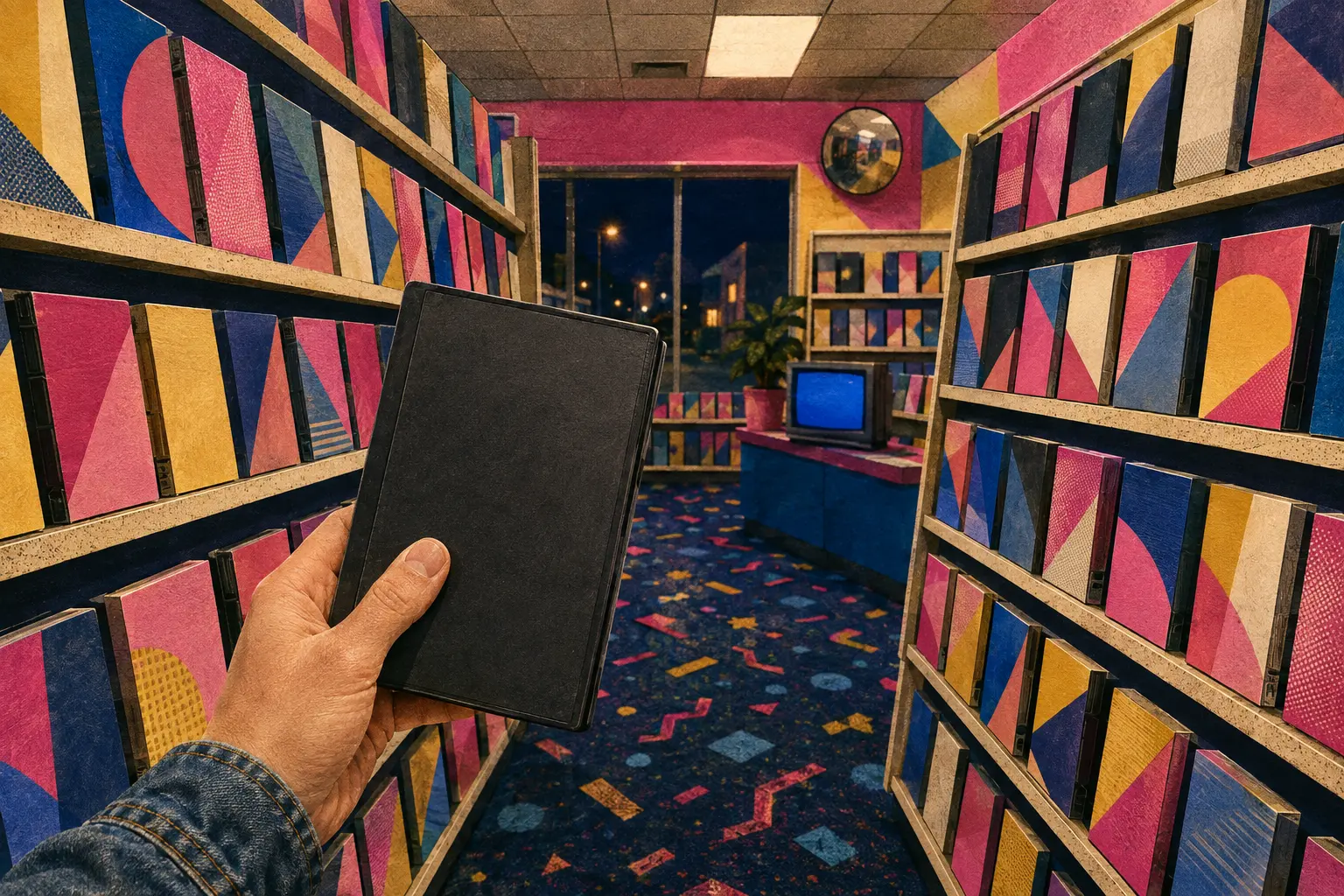
The movie began with a trip beneath fluorescent lights. Choosing meant walking aisles, reading cases and negotiating with everyone who would share the television.
You found the title, reached for the case—and discovered that every copy was gone. The empty display turned a first choice into an improvised second one.
A forgotten tape converted entertainment into a growing obligation. The fee ensured that everyone eventually learned who had left the cassette beside the television.
Home video libraries relied on handwritten labels and trust. One careless press of Record could replace a birthday, a season finale or half a movie with something nobody wanted.
If you missed an episode, it did not wait in a menu. You arranged the evening, programmed a recorder or relied on a friend to explain what happened.
The main screen was a shared resource. Watching something meant consensus, compromise or the quiet victory of whoever reached the remote first.
Why it mattered
U.S. video rentals generated roughly $9–10 billion in 1999, according to a Federal Trade Commission report. The scale was commercial; the experience was intensely local.
A recommendation came from a clerk or a handwritten shelf card. A household usually chose one title. Inefficient as it was, the process forced people to imagine the same evening together.
03 · The computer lab
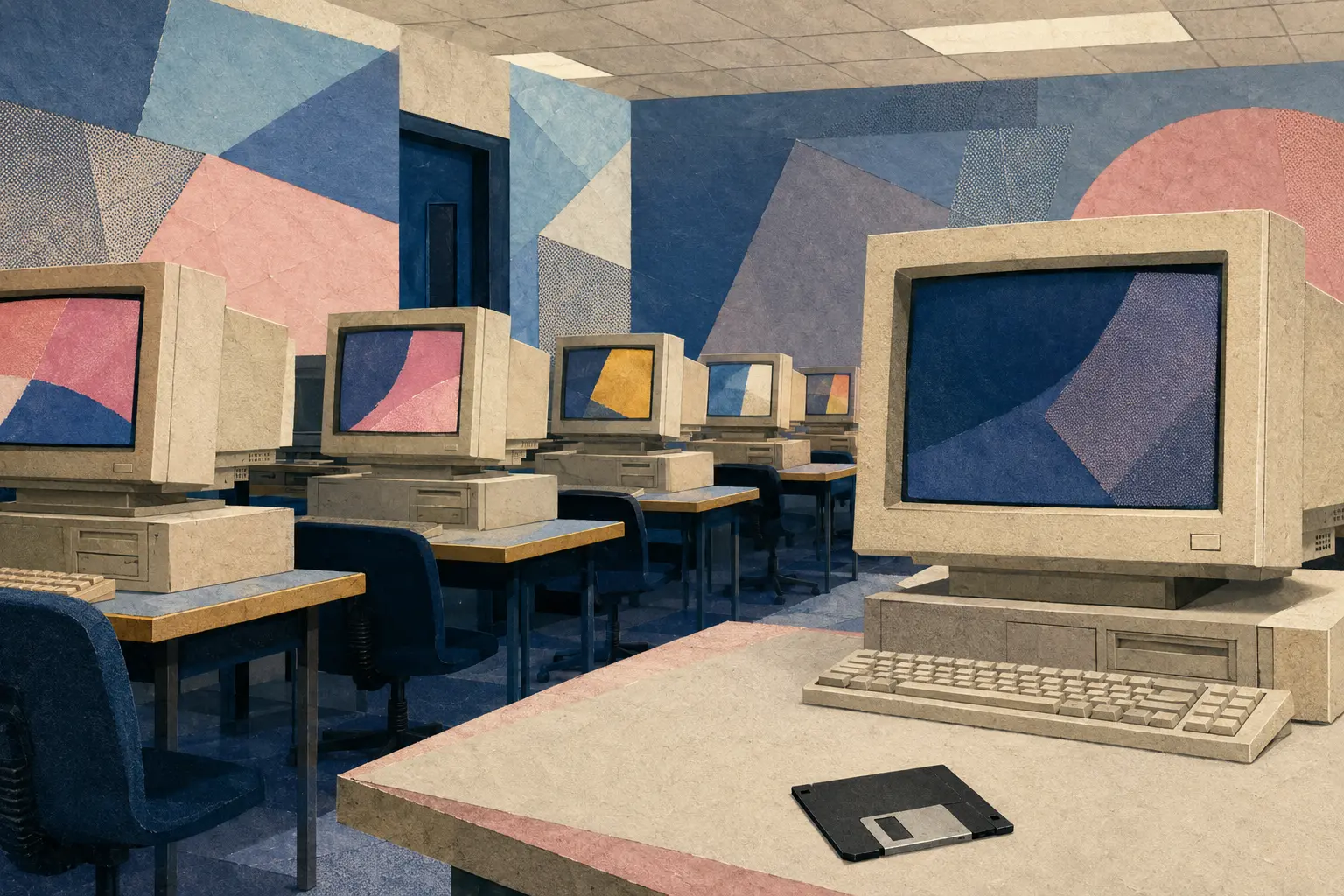
The machines looked identical, but everyone knew which one froze, which one had a stubborn mouse and which one was secretly the best.
A small plastic square carried homework between machines. It felt futuristic until the disk became unreadable five minutes before the bell.
Sending the document again did not make it print faster. It merely guaranteed that three copies would emerge after the teacher fixed the paper jam.
Turn off the monitor and the image collapsed into darkness. Touch the glass and you could feel the faint crackle of a machine that occupied real depth on the desk.
The best educational software turned drills into races, mysteries and adventures. Finishing the worksheet meant earning a few minutes with the program everyone actually wanted.
Twenty monitors faced the walls, yet the forbidden screen was somehow visible from anywhere in the room. Teachers developed an early form of network monitoring: peripheral vision.
Computer time ended because the timetable said so. You saved, logged out, pushed in the chair and returned to a classroom where the future was an overhead projector.
Why it mattered
U.S. public-school internet access rose from 35% in 1994 to 89% in 1998. A connected school did not mean every classroom was connected, which is why labs became scheduled gateways.
They taught file systems, patience and troubleshooting alongside the official lesson. They also exposed the gap between students who had a computer at home and those meeting one mainly at school.
04 · Waiting for ordinary things
You could not check the picture. You carried the remaining exposures for weeks, trying not to waste them and hoping nobody had blinked.
The first time you saw a photograph was after it had been developed. Good pictures, accidental floors and red eyes all arrived together in the same paper sleeve.
A playlist required timing, patience and a physical sequence. Every song choice consumed tape, and every pause became part of the finished object.
You dialed one landline and accepted whoever answered. Reaching a friend could begin with a polite conversation with a parent, sibling or confused grandparent.
Numbers lived in memory because devices did not always carry them for you. A handful of friends, relatives and local services became permanent mental furniture.
Boredom did not make the decade nobler, but it had fewer automated exits. You changed channels, reread a magazine, called someone or simply waited for an idea.
Your result
Mark the moments you remember and your result will appear here.
Sources